 English
 How Much Is My Car Accident Case Worth in California?
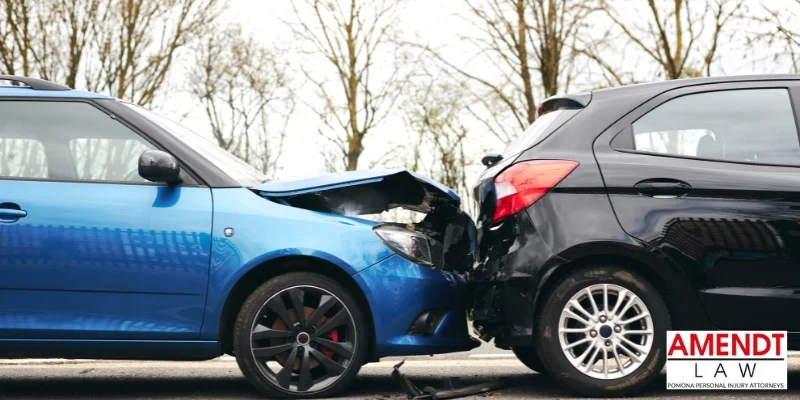
The adjuster’s first offer may have felt insulting. It may have barely covered your ER visit, let alone the physical therapy you haven’t started yet.
Your California car accident case is worth whatever it takes to make you whole again. This includes medical bills, lost income, and physical pain, minus whatever share of fault lands on you. There’s no fixed number and no calculator. What decides the number is evidence, timing, and who’s fighting for you.
El bufete de Christian J. Amendt has spent decades building exactly that kind of evidence for injured drivers across the Pomona area.
Puntos clave
- California’s comparative negligence rule means your recovery is reduced by your share of fault.
- Insurnace policy limits, not your medical bills, are usually the real ceiling on your payout.
- You generally have two years to file a lawsuit, and that clock does not wait for your treatment to finish.
- The gap between an adjuster’s first offer and a fair settlement usually comes down to documentation.
The Law Offices of Christian J. Amendt offers a free consultation, and most car accident cases don’t cost you anything unless there’s a recovery.
California Car Accident Compensation
There are two types of damages in most car accident cases: economic damages and non-economic damages. Economic damages are the costs you can hand an insurance adjuster with a receipt attached. This may include emergency room bills, physical therapy invoices, prescription costs, and the lost wages shown on your paycheck stubs while you couldn’t work.
Non-economic damages cover what a receipt can’t capture, including the physical pain, the sleepless nights, and the months you spent unable to pick up your own kid. For additional context on the risks drivers face, California estadísticas de accidentes de tráfico can provide a broader picture of how frequently these crashes occur.
Insurance companies weigh both. A car accident attorney’s job in the early weeks is to make sure both categories get documented, and that the demand letter that eventually goes out reflects all of it.
Why the Other Driver’s Insurance Limits Cap What You Can Collect
California law sets the state’s minimum liability coverage at $30,000 per person and $60,000 per accident under Vehicle Code Section 16056. Many drivers carry exactly that and nothing more. If the driver who hit you has minimum coverage and your case is worth $150,000, the policy limits, not your injuries, decide what you recover from the other driver.
Uninsured (UM) and underinsured motorist (UIM) coverage
If you carry UM or UIM coverage on your own policy, it fills the gap between what the at-fault driver’s insurer pays and what your claim is worth on paper. Without it, a case worth six figures can collect a fraction of that number, through no fault of your own.
If the driver who hit you was underinsured, The Law Offices of Christian J. Amendt can help you look for every layer of coverage available, including your own policy. A abogado de lesiones personales can also review your insurance coverage and help determine whether additional compensation may be available.
What Comparative Negligence Really Does to Your Compensation
California follows what’s called pure comparative negligence. California’s pure comparative negligence rule came from a 1975 California Supreme Court case, Li v. Yellow Cab Co. Under that rule, your compensation is reduced by whatever percentage of fault a jury assigns to you. For example, a jury can find you 40% responsible for a crash and you still walk away with 60% of the damages.
Insurance adjusters may try to use this rule against you. They’ll point to a late lane change or a rolling stop and try to assign you a significant percentage of fault to shrink your settlement.
We use police reports, dashcam footage, witness statements, and other evidence to evaluate your percentage of fault and negotiate fairly with the insurance company. If you’re dealing with a disputed percentage of fault, speaking with a Abogado especializado en accidentes automovilísticos Pomona can help you understand how comparative negligence may affect your claim.
How Long You Have to File, and What Can Change That Deadline
Most people assume they have plenty of time to decide whether to pursue a claim. They don’t, not relative to how long medical treatment and negotiation actually take. California Code of Civil Procedure § 335.1 gives you two years from the date of the crash to file a lawsuit.
The standard two-year window
Two years sounds generous until you’re six months into physical therapy with no idea how your injury will resolve. Filing on time protects your right to sue even if settlement talks are still ongoing.
When the clock pauses, or shrinks
The deadline can extend if the injured person was a minor at the time of the crash. However, there is a shorter deadline if a government vehicle, like a Pomona city bus or a Los Angeles County vehicle, was involved.
Whatever your case is worth, that number only becomes real once it’s backed by medical documentation, negotiated, and pushed by someone willing to go to court if the offer doesn’t reflect it. Amendt Law has been doing exactly that for drivers across Pomona and the surrounding San Bernardino and Los Angeles County communities for decades, and a first conversation about your case costs nothing.
Preguntas frecuentes
What if I wasn’t wearing a seatbelt when the accident happened?
You can still recover damages, though California’s seatbelt defense might decrease your payout a bit. Insurers sometimes argue your injuries would’ve been less severe with a seatbelt on, which factors into the fault percentage under state law. It’s worth discussing with an attorney before you accept any reduction the adjuster proposes.
¿Necesito un informe policial para presentar una reclamación?
You don’t need one to file, but it helps a lot. A police report documents fault, road conditions, and witness statements while they’re still fresh, which insurers weigh heavily during negotiations. If officers didn’t respond to your crash, write down everything you remember as soon as you can.
Will my case go to trial or settle out of court?
Most car accident cases in California settle before trial. Trial gets reserved for cases where the insurer won’t offer fair value or liability is seriously disputed. Either way, being prepared to go to court usually pushes the insurance company toward a better number.
The Law Offices of Christian J. Amendt: A Pomona Car Accident Law Firm
You came here with one question, and the direct answer is that your case is worth what the evidence proves. Attorney Christian Amendt has held an active California law license since 1983. For decades, he’s watched insurance companies undervalue injuries when medical records tell a different story. That kind of review is what changes a lowball number into a fair one. Póngase en contacto con nuestro bufete for a free consultation if an offer landed in your inbox and feels wrong or if you’re still weighing what to do next.
Premios y afiliaciones







Ubicación de la oficina
363 S. Park Ave., Suite 300
Pomona, CA 91766

© Copyright 2026 Despacho de abogados de Christian J. Amendt
Todos los derechos reservados.Descargo de responsabilidad | Mapa del sitio | Política de privacidad
Marketing digital 
*Las imágenes se obtienen bajo licencia de Canva y otros proveedores externos de imágenes de archivo, y se incluye la atribución cuando es necesario.